What if we told you that your recovery journey doesn't have an expiration date?
For many stroke survivors, the first few months after a stroke are filled with hospital appointments, rehabilitation sessions, and the determination to regain lost abilities.
But somewhere along the journey, survivors may hear something discouraging:
"Most recovery happens within the first six months."
While it is true that recovery is often fastest during the first three to six months after a stroke, this does not mean that recovery stops afterward.
Improvement can continue months, years, and sometimes even decades after a stroke.
And one of the reasons for this is an extraordinary ability of the human brain called neuroplasticity.
What Is Neuroplasticity?
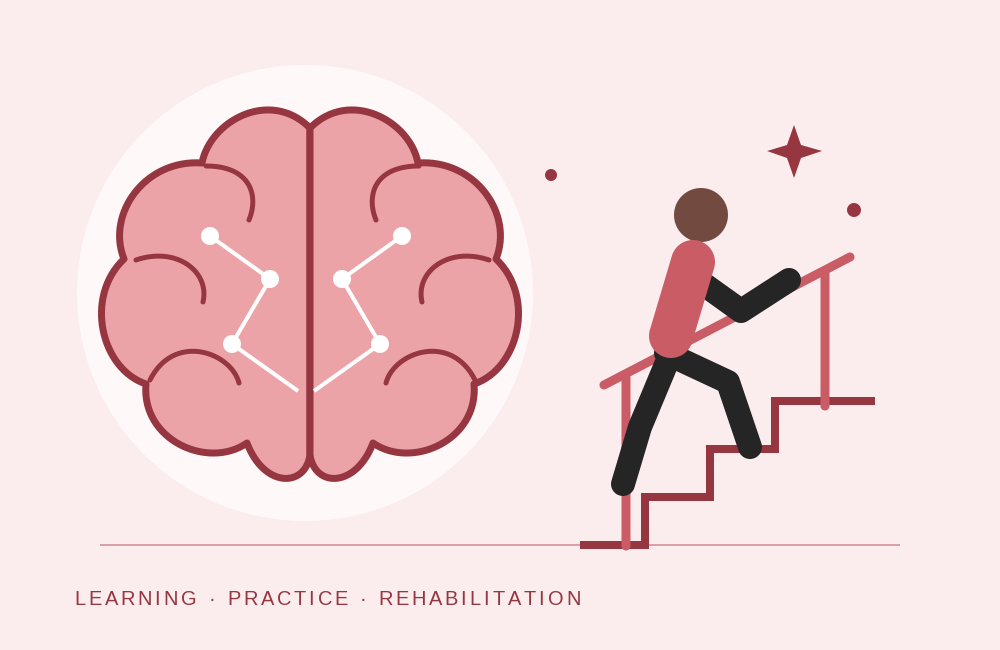
Neuroplasticity is the brain's ability to adapt, reorganize, and change its connections in response to learning, experience, and practice.
When a stroke damages part of the brain, the pathways responsible for movement, speech, coordination, or other functions may be disrupted.
However, the brain has an incredible capacity to adapt.
Through targeted rehabilitation and repeated practice, surviving brain networks can strengthen existing connections and sometimes develop alternative ways of performing tasks.
Think of it like a road that has been damaged.
When the original route becomes unavailable, another route may be found or strengthened. It may take longer, require repeated practice, and work differently from the original road, but it can sometimes help you reach your destination.
Your brain can work in a similar way.
This does not mean every damaged function can be completely restored. However, it does mean that meaningful improvement can remain possible long after the initial stroke.
Why Physiotherapy Matters — Even Years Later
Physiotherapy is not simply about exercising muscles.
For stroke survivors, neurological physiotherapy can help the brain and body relearn how to work together.
Every carefully planned movement provides information to the nervous system.
When you repeatedly practise standing, reaching, transferring your weight, lifting your foot, or walking, you are giving your brain opportunities to learn and adapt.
A physiotherapist experienced in neurological rehabilitation can help identify which movements need attention and develop exercises that challenge the nervous system safely.
Rehabilitation may involve:
- Repetitive, task-specific movement practice.
- Balance and coordination training.
- Walking and gait rehabilitation.
- Strengthening and functional mobility exercises.
- Practising everyday activities such as standing, transferring, and climbing steps.
- Appropriate use of assistive devices and other rehabilitation techniques.
The goal is not simply to move more. It is to practise meaningful movements in ways that encourage learning, improve function, and support independence.
What If It Has Been Two, Five, or Even Ten Years?
If you experienced a stroke several years ago and still struggle with movement, balance, weakness, or coordination, you may wonder whether it is too late to improve.
The answer is that time alone does not determine whether further progress is possible.
Research into chronic stroke rehabilitation has demonstrated that people can make functional gains even years after their stroke.
Those improvements may involve walking speed, balance, use of an affected arm, endurance, or greater independence with daily activities.
However, recovery is different for everyone.
The type and severity of the stroke, existing health conditions, rehabilitation opportunities, fatigue, muscle stiffness, and other factors all influence what progress may be achievable.
Some survivors experience significant gains. Others make smaller but meaningful improvements. For some, therapy may focus on preventing complications, maintaining abilities, or finding new ways to perform daily tasks.
All of these outcomes matter.
Consistency Matters More Than Perfection
Recovery can be frustrating.
Some days, movements feel easier. Other days, fatigue, stiffness, or discomfort can make even familiar tasks challenging.
That does not necessarily mean you are moving backward.
Learning a movement after a stroke can require considerable repetition, patience, and adaptation.
Your rehabilitation team can help you develop a manageable programme that fits your abilities and goals.
A few important principles can guide the journey:
Practise with purpose. Focus on movements that support the activities you want to regain.
Build consistency. Regular, appropriate practice is generally more useful than occasional bursts of exhausting activity.
Allow yourself to rest. Fatigue management and recovery time are important parts of rehabilitation.
Celebrate small gains. Standing with better balance, reaching a little farther, or completing a daily task with less assistance can represent meaningful progress.
Seek professional guidance. Exercises should be tailored to your abilities, particularly if you experience weakness, spasticity, pain, falls, or other complications.
Recovery Is More Than Walking Again
When we discuss stroke recovery, we often focus on physical milestones.
But recovery also involves communication, memory, confidence, emotional well-being, independence, and participation in everyday life.
Physiotherapy may be one important part of rehabilitation, but occupational therapy, speech and language therapy, psychological support, and other services may also be essential.
Recovery is not always about returning to exactly who you were before the stroke.
Sometimes it is about discovering new abilities, rebuilding confidence, adapting to challenges, and creating a meaningful life after stroke.
A Message to Every Stroke Survivor
If you are six months into your recovery, do not assume your opportunity for progress has passed.
If you are two years into your recovery, do not believe that you have missed your chance.
If you are ten years into your journey, do not assume that learning and improvement are impossible.
There may still be opportunities to improve your abilities, strengthen your independence, and enhance your quality of life.
Your progress may be slower than you hoped. It may require professional support, repeated practice, and adjustments to your goals.
But your journey is not defined by a deadline.
Your brain can continue learning. Your body can continue adapting. And your life after stroke can continue growing.
Keep Moving. Keep Learning. Keep Hope Alive.
At the Stroke Association of Trinidad and Tobago, we believe every survivor deserves access to education, encouragement, rehabilitation resources, and opportunities to thrive.
Our mission is rooted in four principles:
Prevent • Treat • Recover • Thrive
Because life after stroke deserves more than survival. It deserves opportunity, dignity, and hope.
Work with qualified rehabilitation professionals to develop a plan that suits your needs. Connect with the Stroke Association of Trinidad and Tobago for education and future community resources.
Medical Disclaimer: This article is intended for educational purposes and does not replace professional medical advice. Rehabilitation outcomes vary. Stroke survivors should consult their healthcare providers or qualified rehabilitation professionals before beginning or changing an exercise programme.
Work with qualified rehabilitation professionals for advice tailored to you.
Connect with SATT for education and future community resources →Sources & further reading
Consult these organisations for further information. Source links are provided for context; no endorsement of SATT is implied.
If you notice an error or need information in another format, contact SATT.